
Unixconfig
Just my dotfiles for *nix systems.
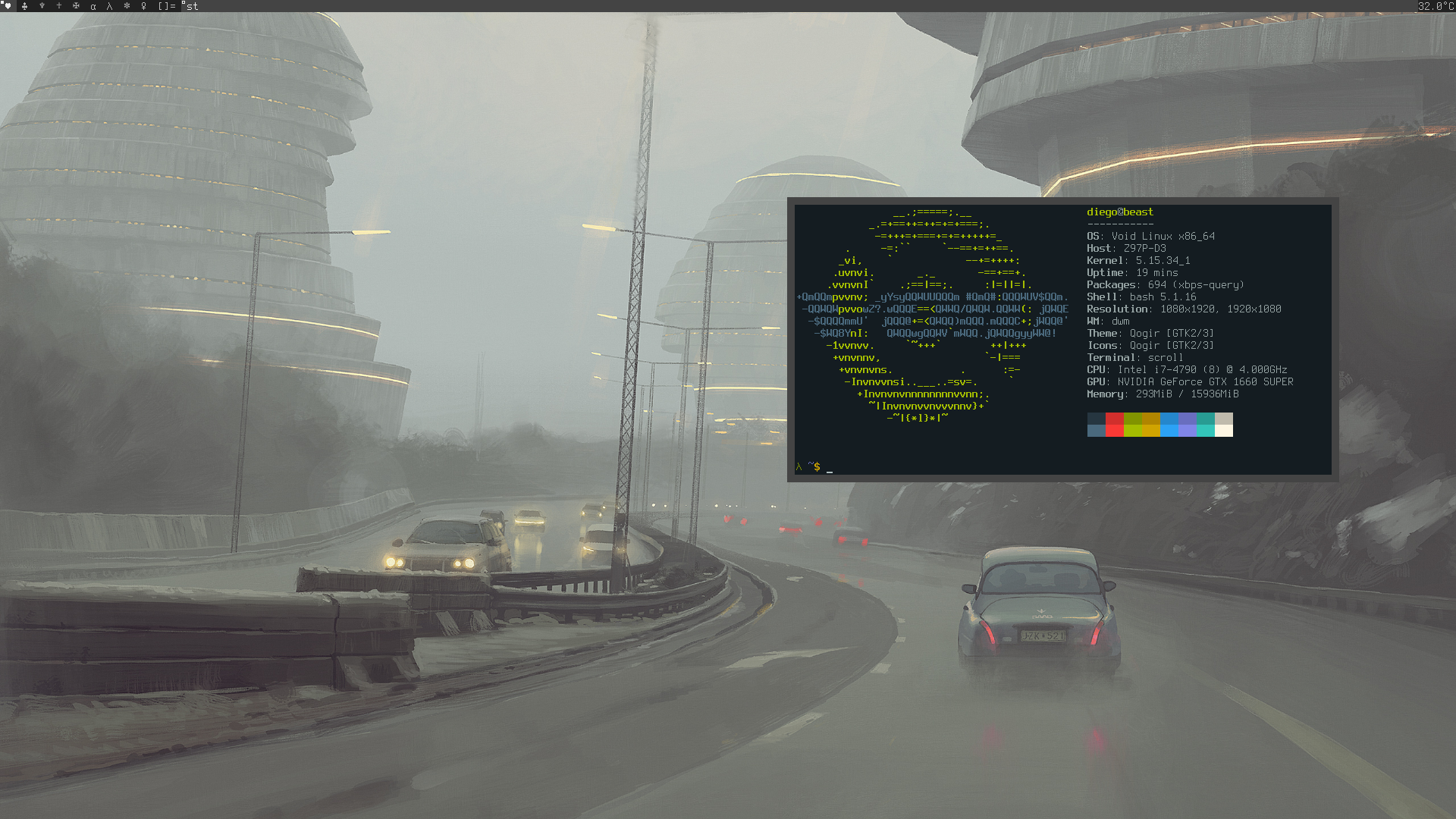
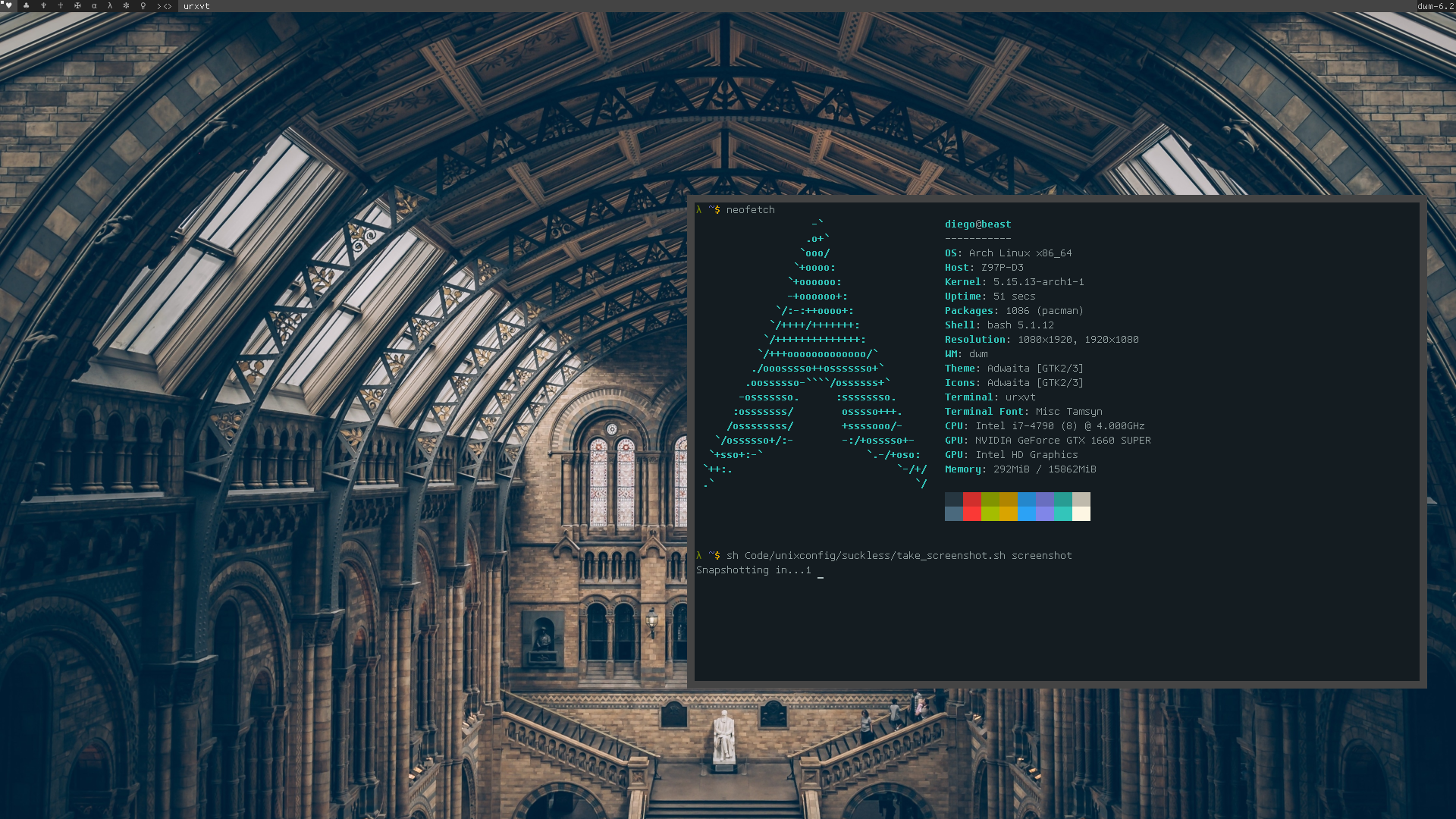
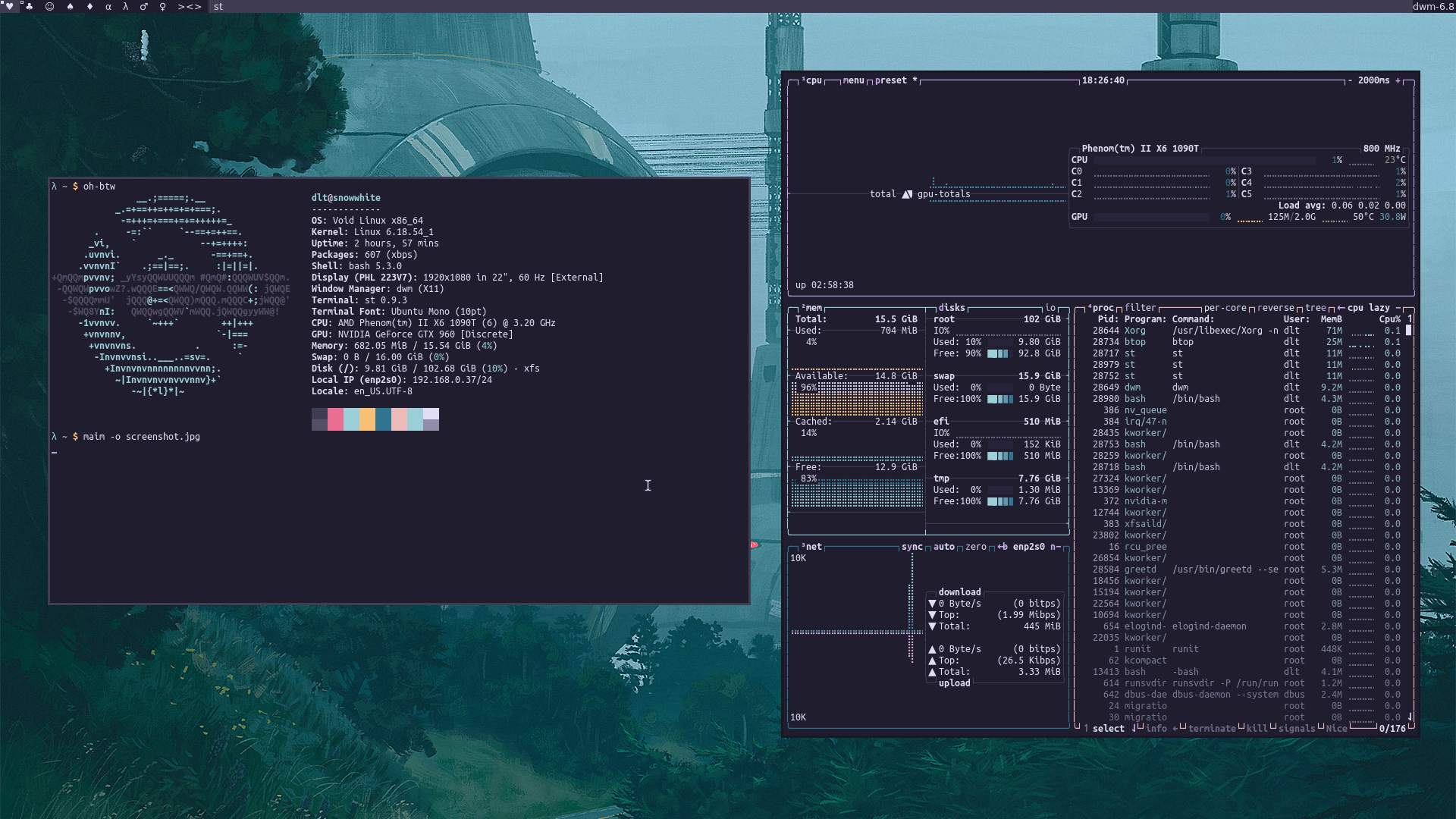
I've been hanging around this repo for a few years. I created this repo around 2017, when I started to take vim seriously. But I had an explosion of commits around my sabbatical, when I started to use dwm and VoidLinux. Anyways, this is the latest revision, and I have changed the structure of the repo.
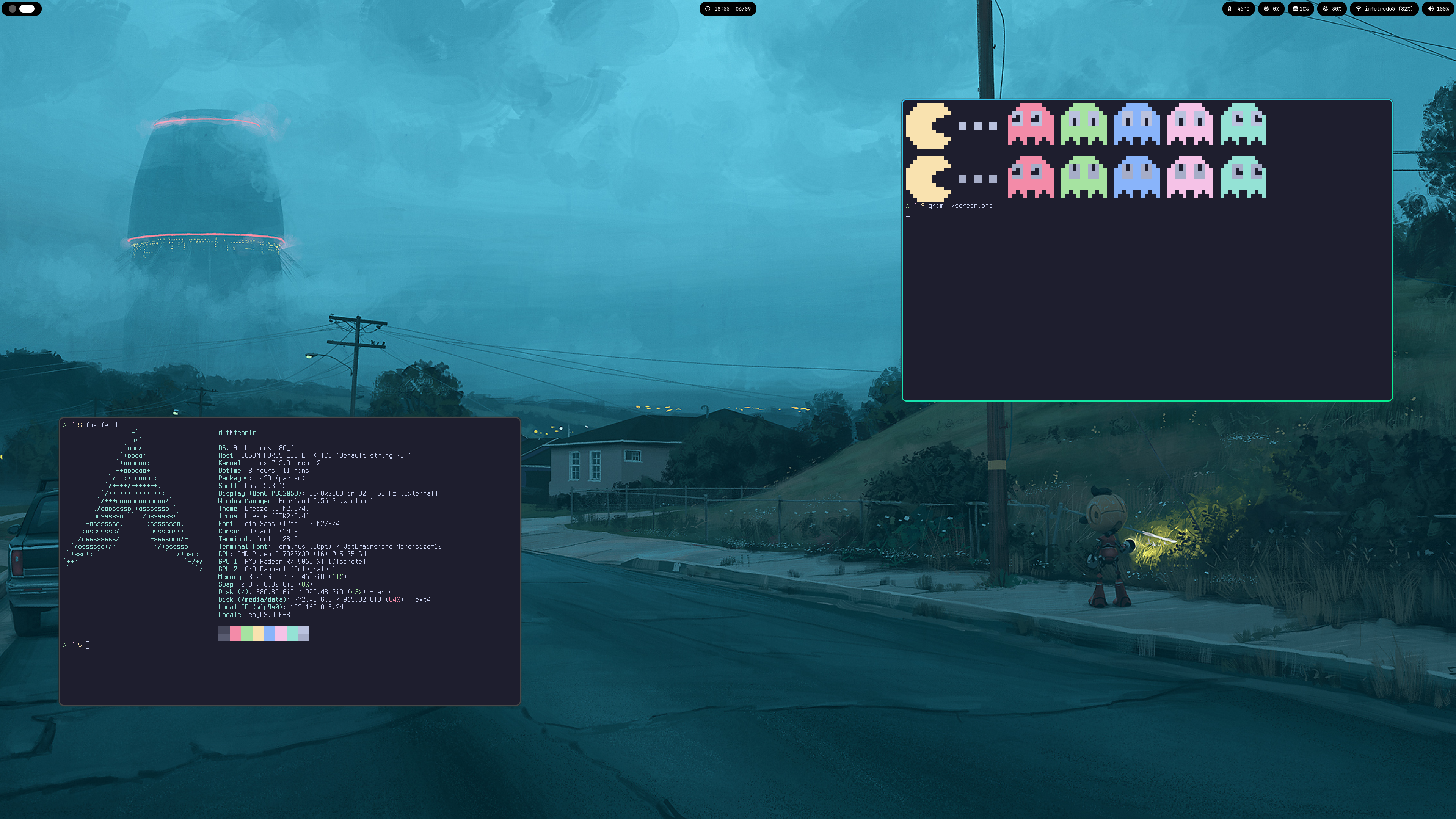
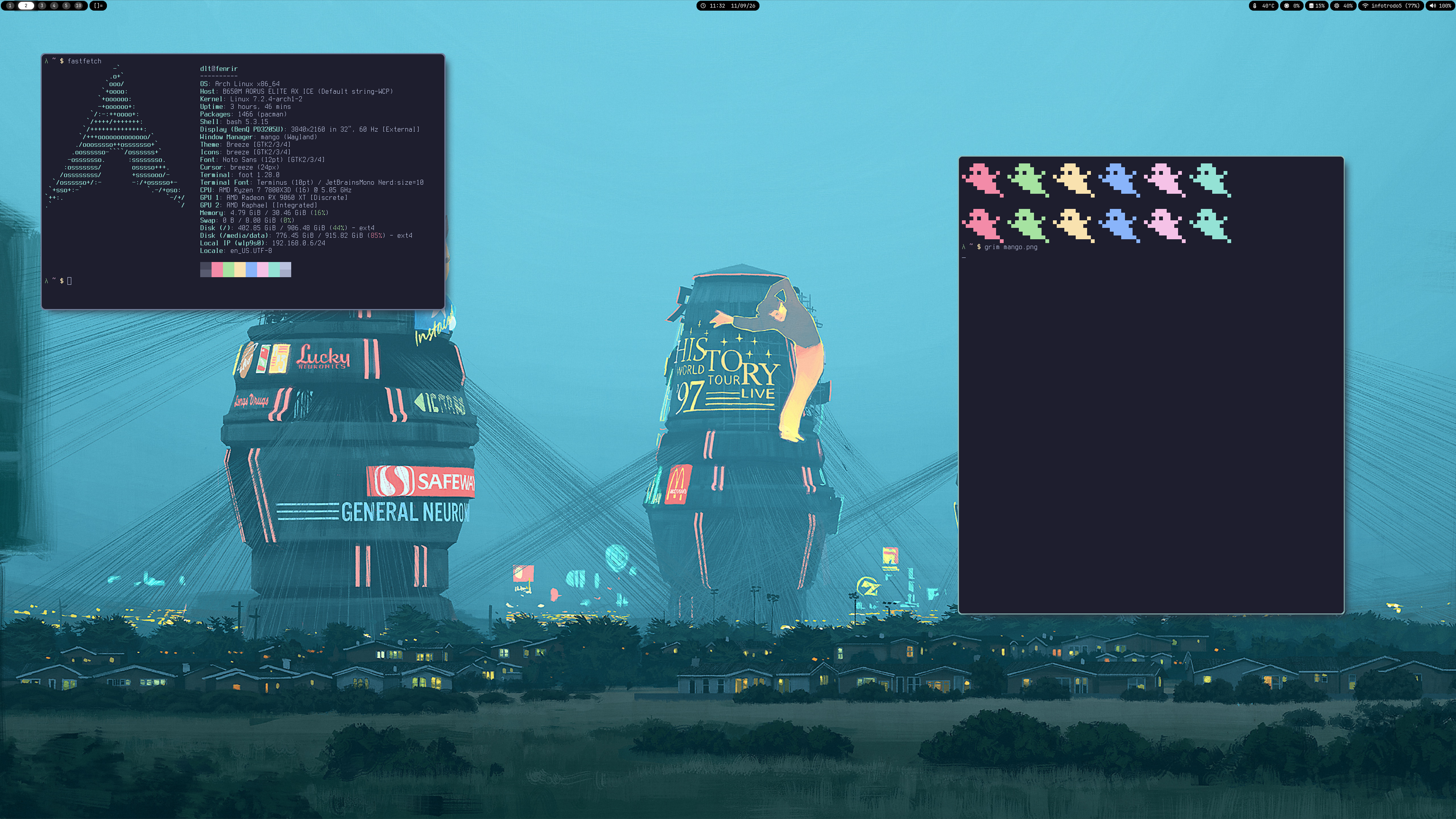
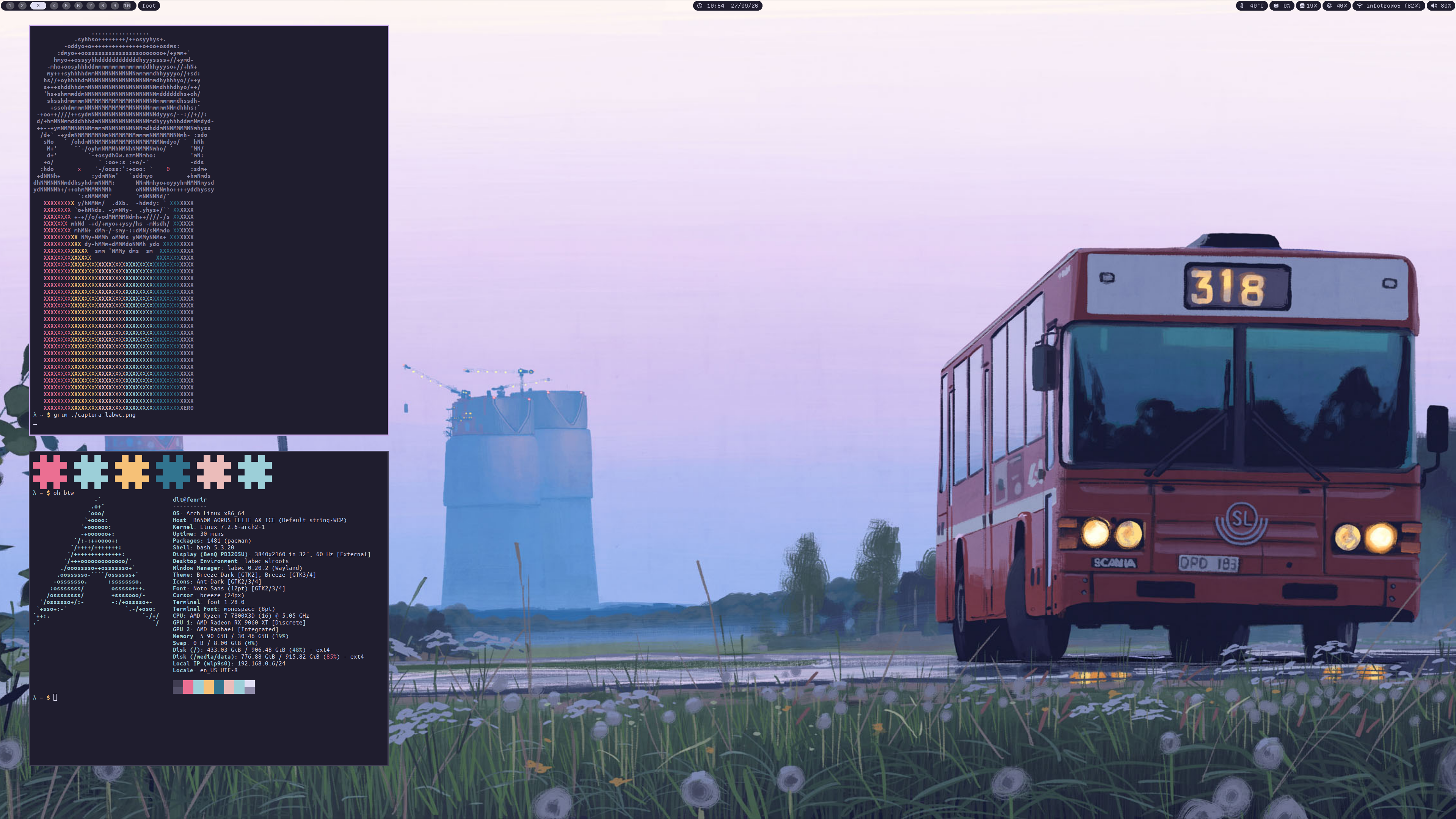
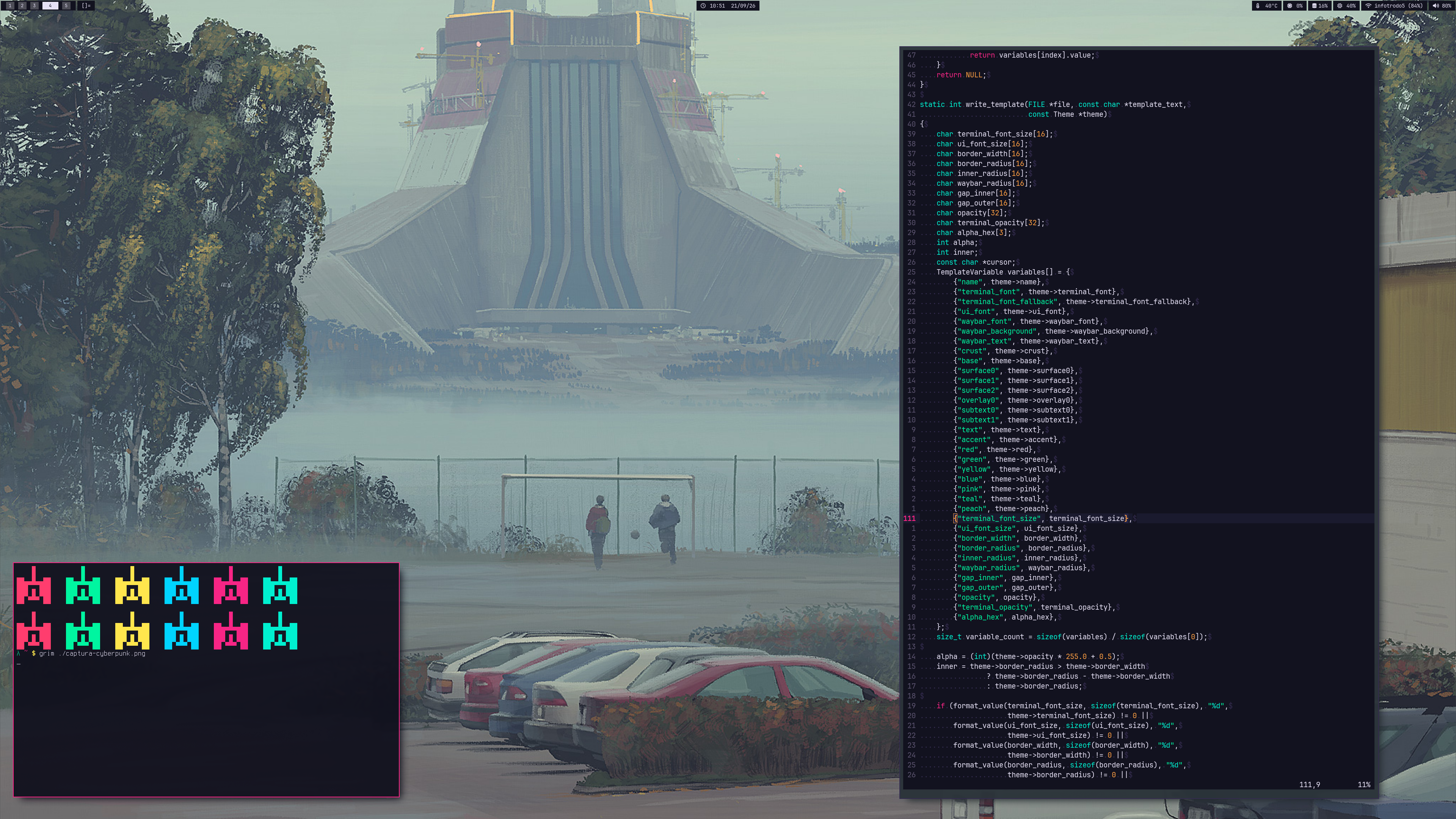
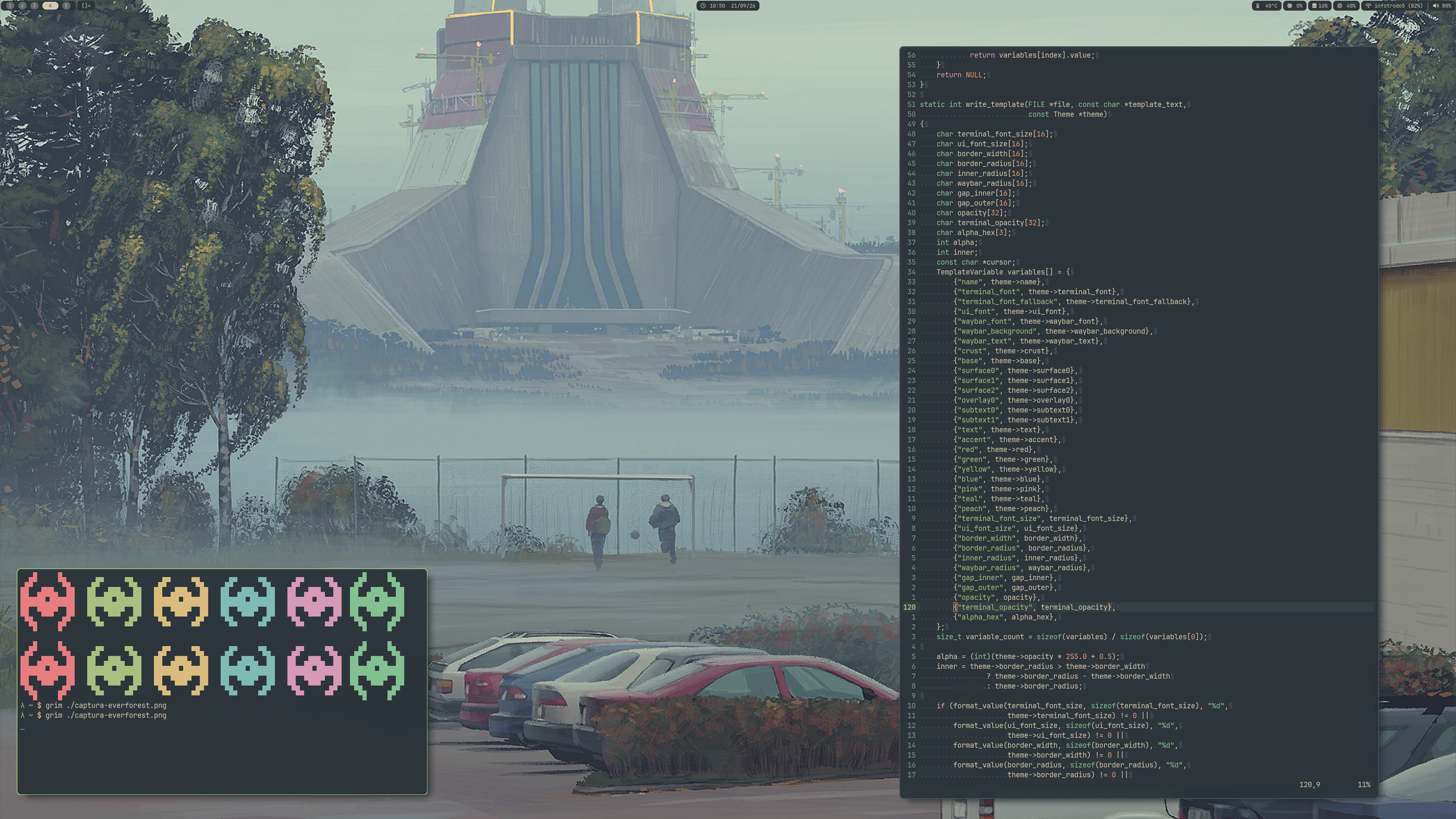
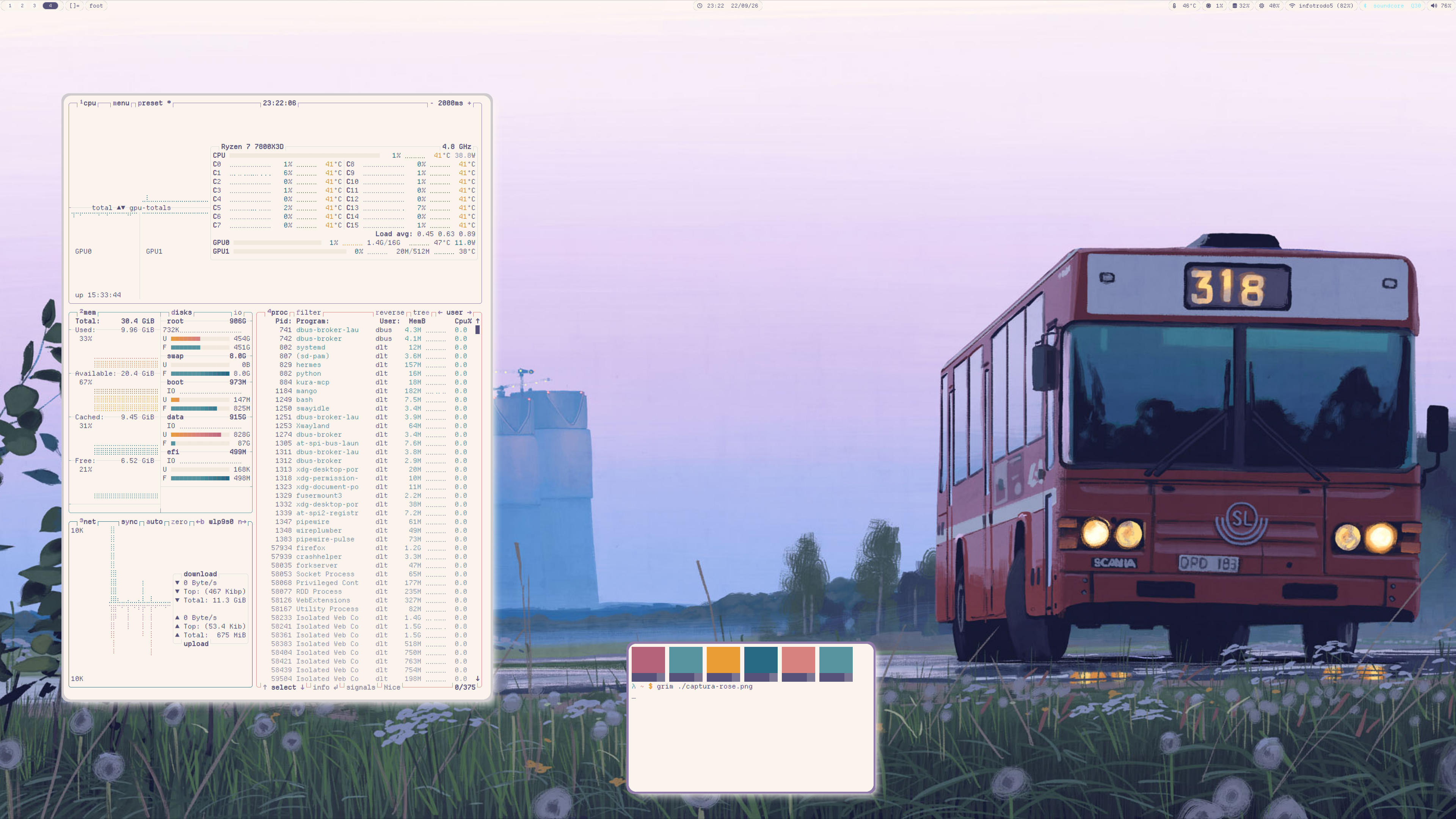
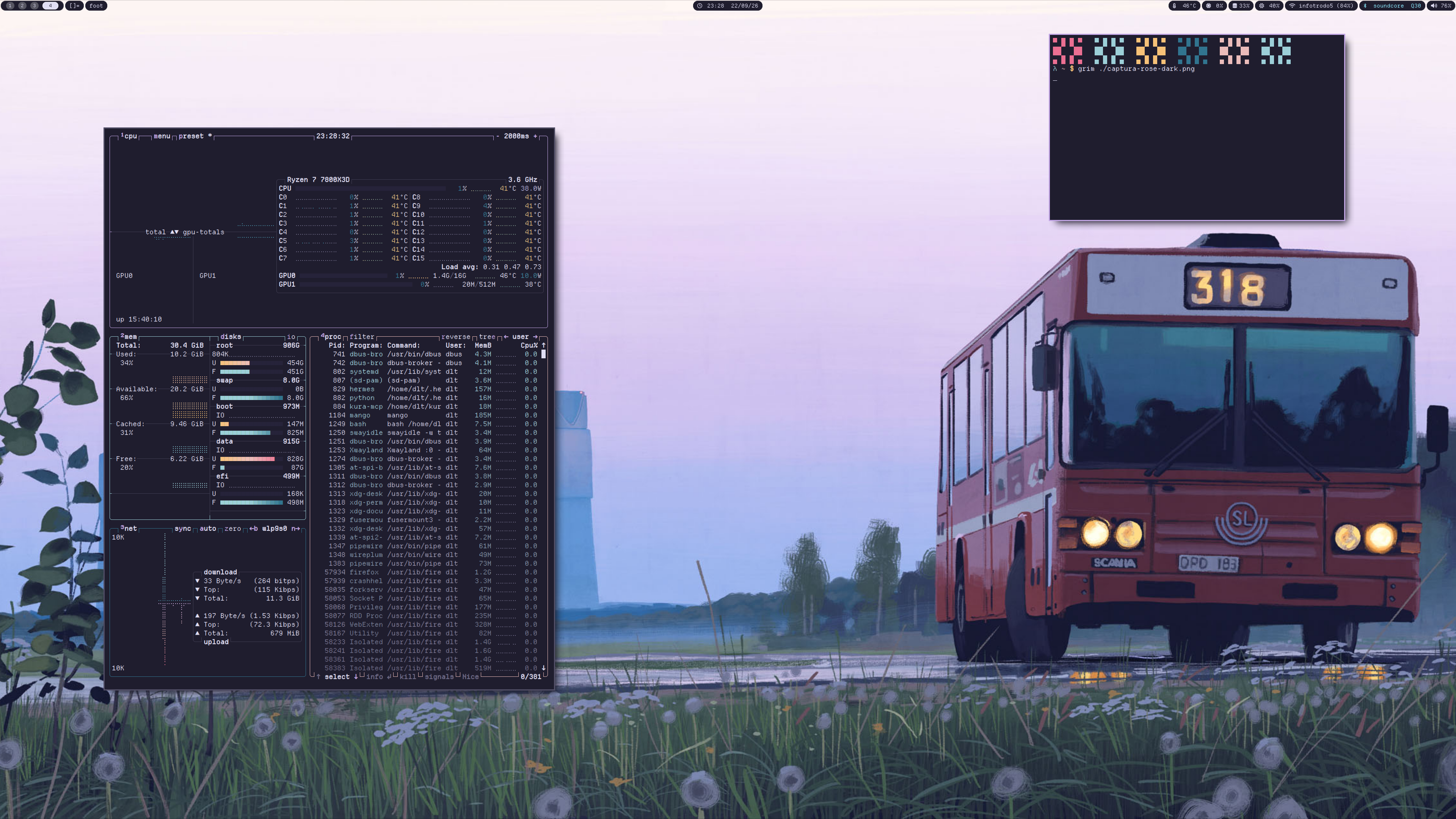
Showcase
Structure
Well, it's organized this way:
| Folder | Description |
|---|---|
| base | Base configuration folder. Basic things, configurations for programs that I consider to be essential |
| data | Some random shit, like my bookmarks. Data in general that I'd like to bring with me |
| flavors | Some 'flavor'-specific configuration. Like "FreeBSD + dwm + x11" or "linux + wayland + labwc" |
| optionals | Configurations for optional programs (that I don't always install) or replacements for programs in base folder |
| programs | My own scripts and programs that I like to keep with my dotfiles, I don't always install and I don't know where to put them |
| showcase | Some screenshots of my setups in different machines |
How can you install my dotfiles
I don't want to use stow or any installation script. Just fucking copy what you want and... that's it.
Sooooo you want my bashrc? Well, just fucking copy it. It's under base folder (cause it's my default command interpreter, duh). Do it like this:
cp -ia base/.bashrc* ~
It's old-school, it is not fancy. It's not awesome. It's just a fucking cp and it's fine.
Every folder in detail
Every folder mirrors your home folder. So, if you see .config/vis you should copy it to /home/you/.config/vis. Anyway, let's address every folder, and what lives in every one:
base
Again, my base configuration folder
- bash
First things first I have my command interpreter configuration. You may ask... why bash? Well, It's the default command interpreter in almost every linux distro and I don't see any reason to drop it in favor of another shell. Maybe I will change it to something more... suckless. Back to the configuration, there are two files: bashrc and bashrc.local. bashrc is the base configuration, and something you should not edit directly. bashrc.local is your local-machine configuration, where you can tune your bashrc.
- gitconfig
My git configuration. I like to have it here to always copy the same git name and git email.
- vim
Ooooh vim. My beloved text editor. I use vim everywhere: on my system, on servers... I'd use it even for my ceramic hob. I simplified my vim 8/9 config to just have fzf support. So, you don't have to install plugins and other bloat in your system. Just drop .vim and .vimrc and you are good to go!
- .wallpapers
My wallpapers folder. It's a separate folder 'cause I can create scripts to read images from this folder and to change my current wallpaper using swaybg, xwallpaper and so on. You will find two subfolders: available and enabled. If you have used NGINX you can guess what you should do. If you haven't, well my friend, it's the suckless way to decide which wallpapers you want and which you don't. You just sym-link them into enabled and you are ready to go. More notes in the enabled folder README.
Most of the wallpapers in available are art by Simon Stålenhag, my favorite painter. All the credit goes to him: those images are his work, not mine, and they are not covered by this repository's license.
- .local/bin
For some years now, I've made it a habit to create a bin folder inside my ~/.local home folder. It's a good way to have your "custom" and "user-only" binaries. Just copy this folder and with my .bashrc, every binary you drop in .local/bin will be in your PATH.
- vis
Vis is a simpler and cleaner version of vim. Vim has a long history on its shoulders. That means that vim has to maintain backwards compatibility with years and years of development. In contrast, vis doesn't have to. I started to use vis as a replacement for its bloated cousin, nvim. Maybe in the long run I will drop vim too.
My shortcuts, requirements and LSP setup are documented in base/.config/vis/README.md.
optionals
- .config/gtk-X.X
Just default configuration to style GTK-based apps. Combine it with my theme manager, cwal (look at programs section)
- nvim
NeoVim. I dont know what to say. It's NeoVim, a vim alternative. Bloated as hell. A good alternative to the original vim. Not so good alternative to vis.
- ranger
I love terminal file manager. I currently prefer yazi because, you know, it's not written in an interpreted language like python. I used to use ranger before. This configuration enables image rendering in the terminal.
- doom.d
What happens if vim and emacs fuck together. Well, you get doom emacs. I love the concept that emacs is, essentially, a Lisp-like interpreter with a editor on top of it. But doom emacs is a bloated emacs distribution. It's a no-no for me.
- .emacs
Again, I like the concept of emacs. I don't like the execution.
- zsh
If you use zsh instead of bash you can copy .zshrc and .zshrc.local.
flavors
I will talk about every folder in general, without talking in detail what it's inside in each one.
- linux-dwm
Linux with Xorg and dwm. You must download dwm and st and place them inside your .config folder. You should end up with .config/dwm/
- linux-hyprland
I liked using hyprland, but it's missing in some distros (if not almost every distro), and good luck compiling it from source: there are like 8 or 10 repos to compile in order, it depends on the latest C++ features (sometimes not supported by the GCC compiler distributed with your distro) and you end up fighting your libstdc++ and the libc++ of clang 'cause clang does support the C++ version that hyprland is written in. I hate modern software and I hate hyprland and its nonsense decisions.
Long story short, if you're on Arch and want to use hyprland copy this configuration.
- linux-labwc
I love labwc. If you want something lightweight and you don't want a tiling wm then just use labwc.
- linux-mango
My new favorite wm. In contrast to hyprland, it's just one repo written in plain old C.
- linux-river
I don't even remember what river is.
- linux-sway
It's like i3 but for wayland. Ewwwww, disgusting...
...
You may ask why I consider i3 and sway disgusting. It's just my opinion, but I hate that i3/sway asks me every time I open a window where the fuck I should put it. JUST OPEN IT, FOR GOD'S SAKE. I like any dynamic tiling window manager more than i3/sway.
programs
- sublime-text
I don't even use sublime anymore. This are my old settings, just in case I get brainrot or something and I want to use this editor.
- vscode
Same as above. Just use vis/nvim/vim. If you want a graphical editor with fancy effects and so on, use Zed instead. At least it's written in Rust.
cwal
Cwal is my program to synchronize the desktop theme. It will read a theme defined in a key value like config file and it will generate every configuration file for every supported program you have installed. This way, you can change your theme to Rosé-Pine (my fav) and change, for example:
- vim
- vis
- nvim
- Thunar or any GTK-based program
- Firefox
- btop
- foot
- your mango/labwc/any other wm theme
- your waybar theme
- and others!!!
I recommend to you to copy the folder programs/cwal to your .local/bin/cwal, run make inside .local/bin/cwal-code. Then you can change a theme using this command:
~/.local/bin/cwal-code/apply-theme ~/.local/bin/cwal-code/themes/rose-pine-dark.conf
Some recomendations:
* GTK themes needs breeze-gtk to work
* Dwm needs to have the dwm and st code inside your .config folder like this: .config/dwm and .config/st. Tested versions are dwm 6.8 and st 0.9.3
Full documentation (every program, theme keys, template variables and how to add your own) in programs/cwal/README.md. The per-program scripts are described in components/README.md.
License
Copyright (C) 2017-2026 deltegui
This repository is licensed under the GNU General Public License v3.0. If you modify and share it, share it under the same license and keep my copyright notice.
Third-party code keeps its own license, like vis-lspc, and the wallpapers keep the copyright of their authors.